How Browser Rendering Advances Support Team Strategies in Mobile Web Titles Mixing Speed Events with Exploration Mechanics
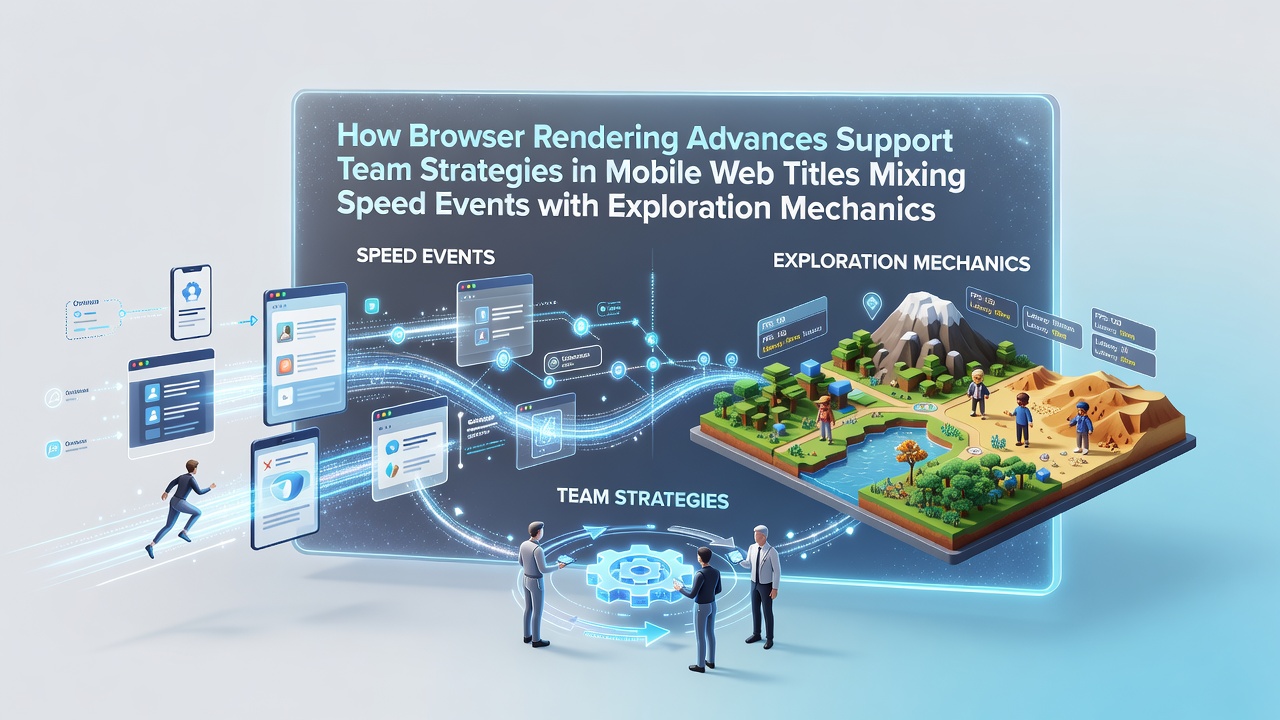
Browser rendering technologies have evolved considerably by June 2026 and these changes directly influence how teams coordinate in mobile web titles that combine rapid speed events with open exploration mechanics. Developers now leverage improved JavaScript engines alongside WebAssembly modules to handle complex scene calculations on devices with varying hardware capabilities while maintaining consistent frame rates across sessions.
Rendering Pipeline Improvements and Mobile Performance
Modern browsers incorporate advanced rasterization techniques and hardware-accelerated compositing that reduce latency during simultaneous player movements and map discoveries. These pipelines allow multiple users to navigate shared environments where one group might compete in timed speed segments while another explores hidden routes for strategic advantages. Data from industry analyses shows that titles utilizing updated WebGPU implementations achieve up to 40 percent faster asset loading compared with earlier standards which enables seamless transitions between competitive bursts and deliberate exploration phases.
Team strategies benefit because players receive real-time visual feedback on teammate positions without interruptions from rendering delays. Observers note that synchronized updates help groups plan joint maneuvers such as splitting forces to cover both speed challenges and resource-gathering zones in a single session.
Integration of Speed Events with Exploration Layers
Mobile web games increasingly layer speed-based competitions onto expansive maps that reward careful navigation and discovery. Rendering advances support this hybrid design by streaming high-detail textures only when players approach specific areas while maintaining low-poly models during high-speed segments. This selective loading prevents performance drops that previously disrupted coordinated team efforts. Research from the Interactive Software Federation of Europe indicates that such optimizations have increased average session lengths in cross-platform titles by supporting fluid shifts between racing objectives and reconnaissance tasks.
Players often divide responsibilities where some focus on velocity records while others map terrain features for future events. The underlying graphics systems handle these overlapping demands through efficient memory management and predictive rendering which anticipates player paths based on current trajectories.

Team Coordination Enabled by Real-Time Rendering
Enhanced rendering capabilities allow for persistent world states that multiple participants can influence simultaneously. In practice this means one team member can trigger an environmental change during exploration that immediately affects speed event conditions for the rest of the group. Browser updates in 2025 and 2026 introduced better support for WebSockets integrated with graphics layers which reduces desynchronization issues that once hindered collaborative tactics.
Figures from the Entertainment Software Association reveal growing participation in these hybrid formats particularly among mobile users who access games through standard browsers rather than dedicated applications. Teams exploit these stable connections to execute complex plans such as timed relays where explorers reveal shortcuts that racers then utilize within the same event window.
Future Developments in Browser-Based Multiplayer Systems
Continued refinements in ray tracing approximations and AI-assisted culling promise further gains for titles that blend rapid movement with detailed world interaction. Developers are testing these features in experimental builds that maintain compatibility across major mobile platforms while preserving battery efficiency during extended group sessions. Such progress supports the emergence of larger scale events where dozens of participants coordinate across mixed speed and exploration objectives without requiring specialized hardware.
Academic studies from institutions including those in Canada and Australia continue to track how these technical improvements alter player behavior patterns in browser environments. The results show measurable increases in strategic depth as rendering fidelity allows teams to gather and act on visual information more effectively during live competitions.
Conclusion
Browser rendering progress has become integral to the viability of mobile web games that merge speed events with exploration mechanics. These technical foundations enable teams to develop and execute coordinated approaches that span competitive and investigative elements within unified sessions. As standards advance further the capacity for sophisticated multiplayer interactions on accessible platforms continues to expand based on documented performance metrics and usage trends through mid-2026.